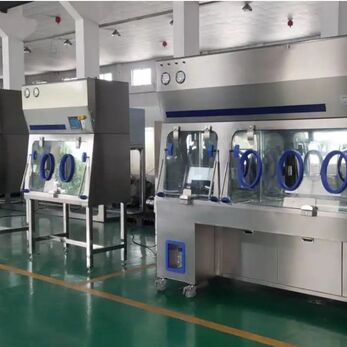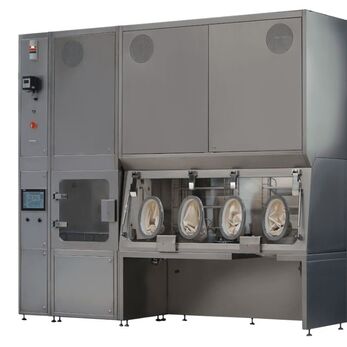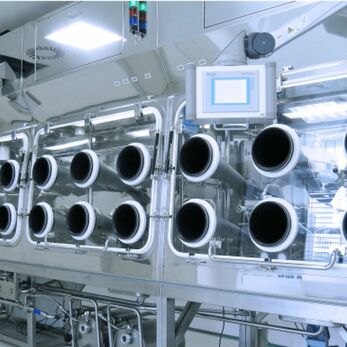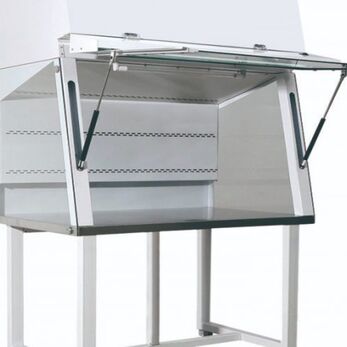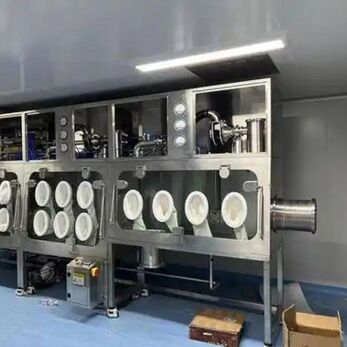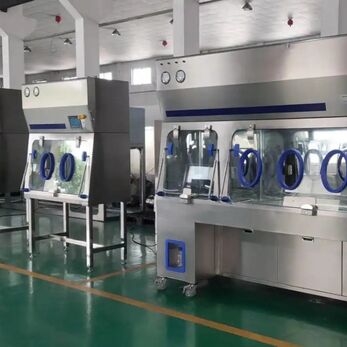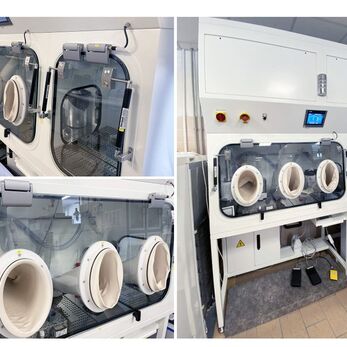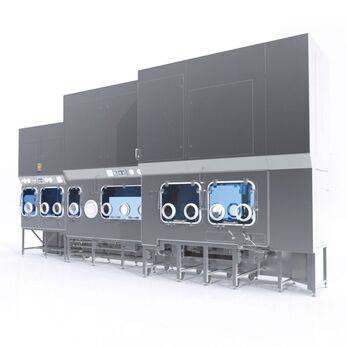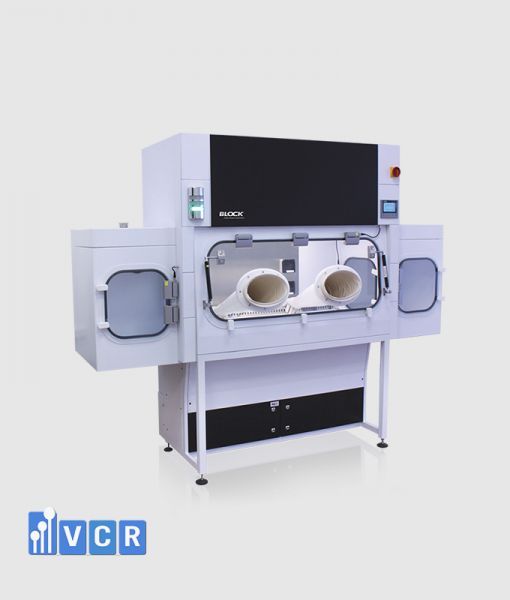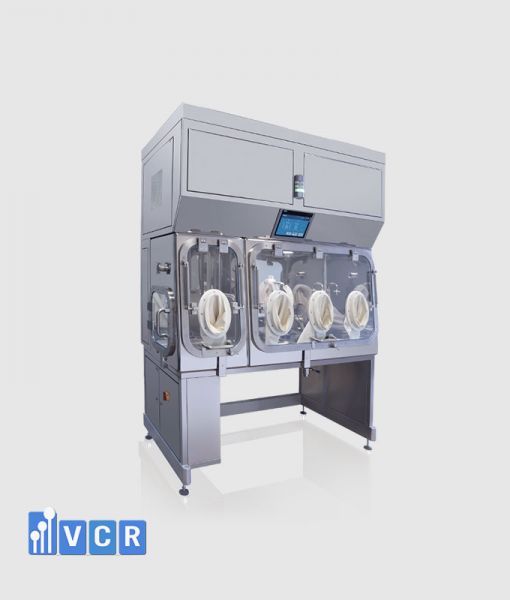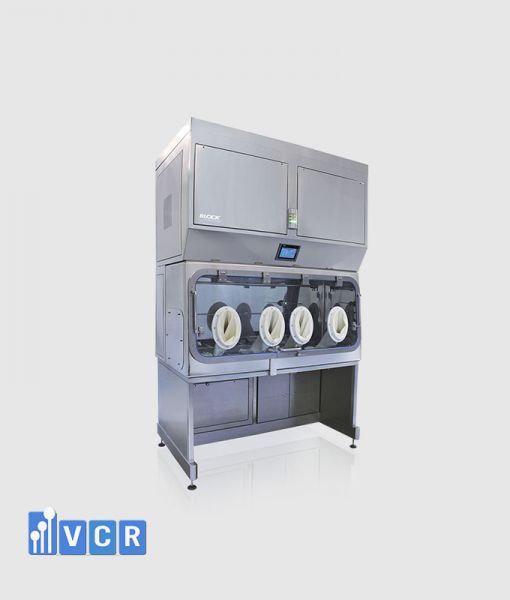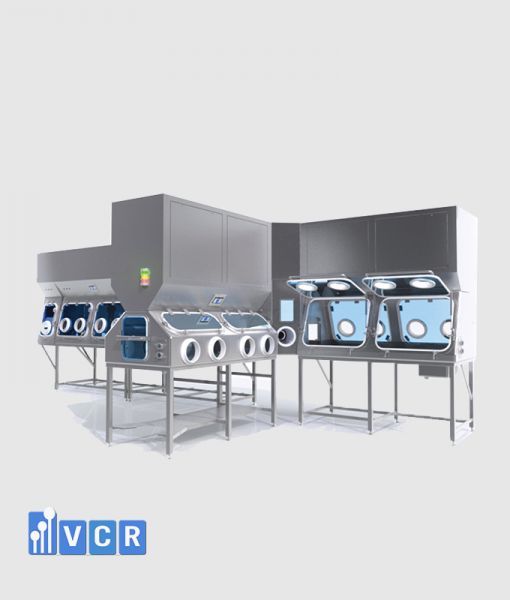

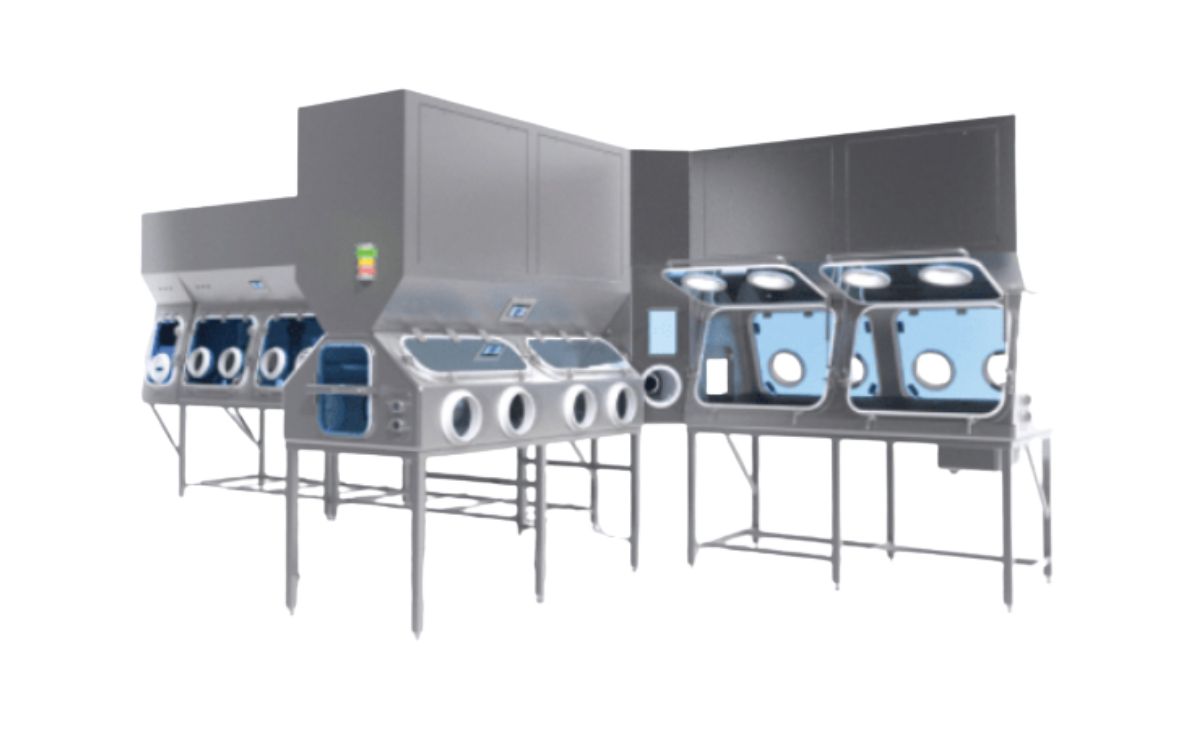
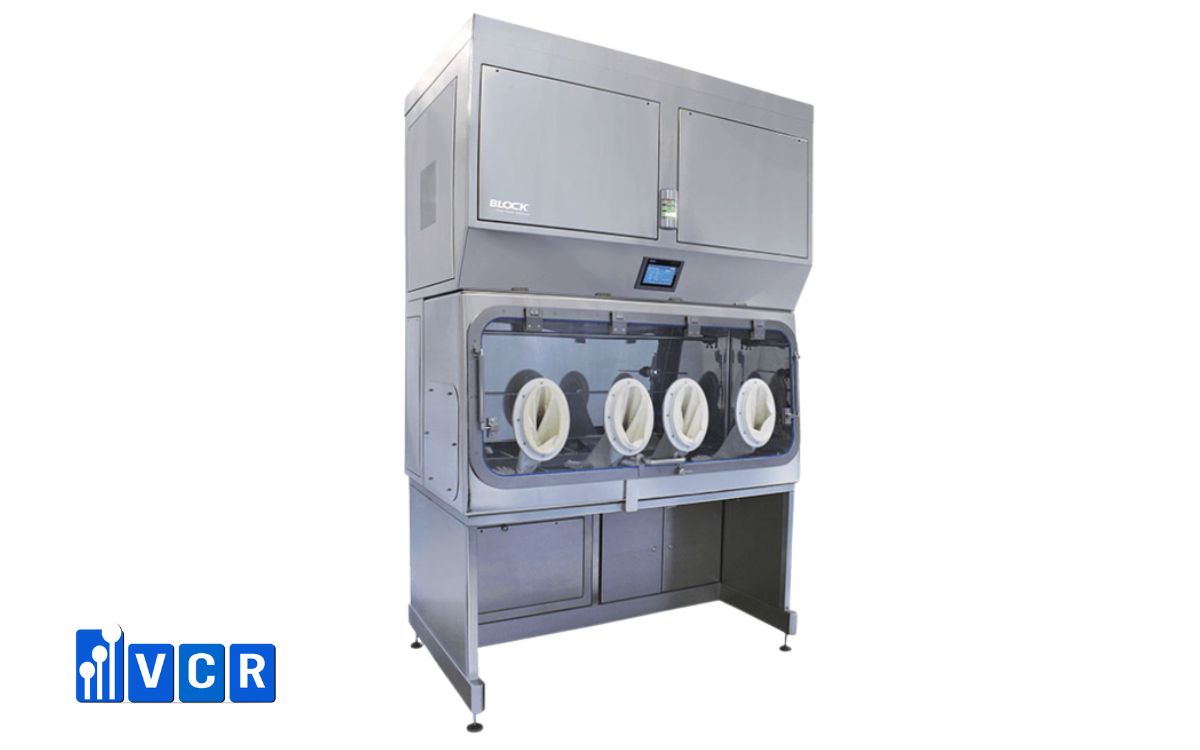
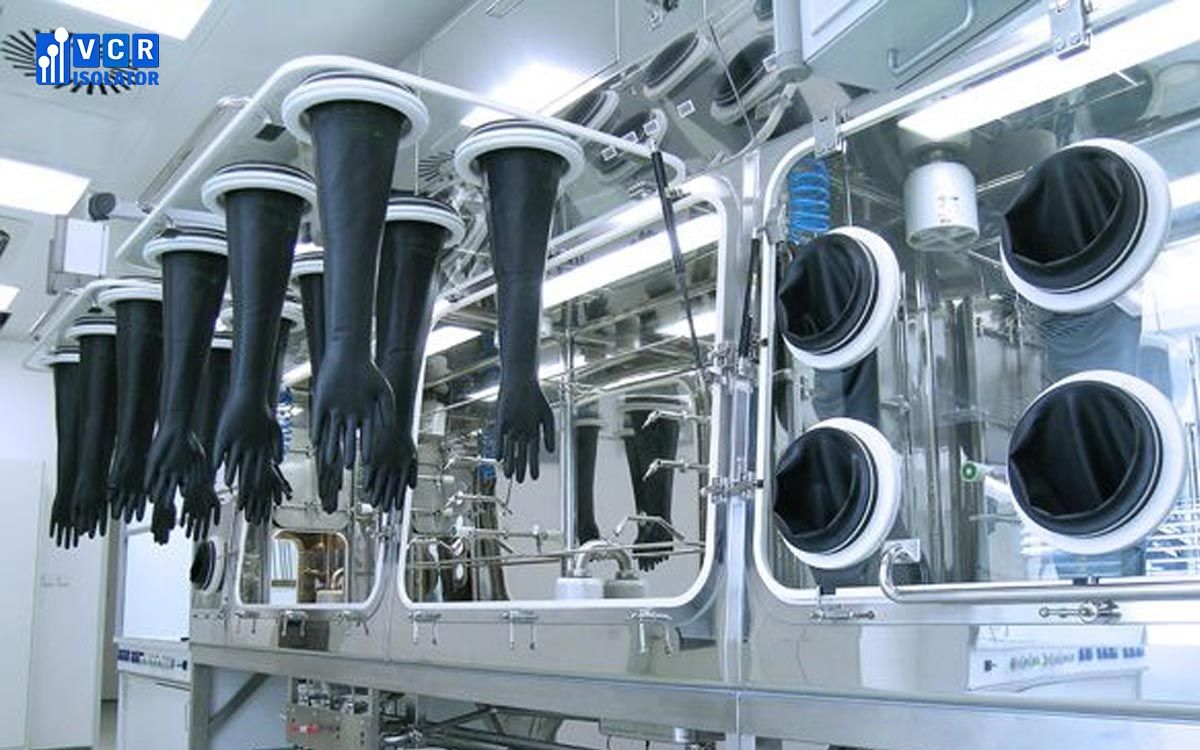
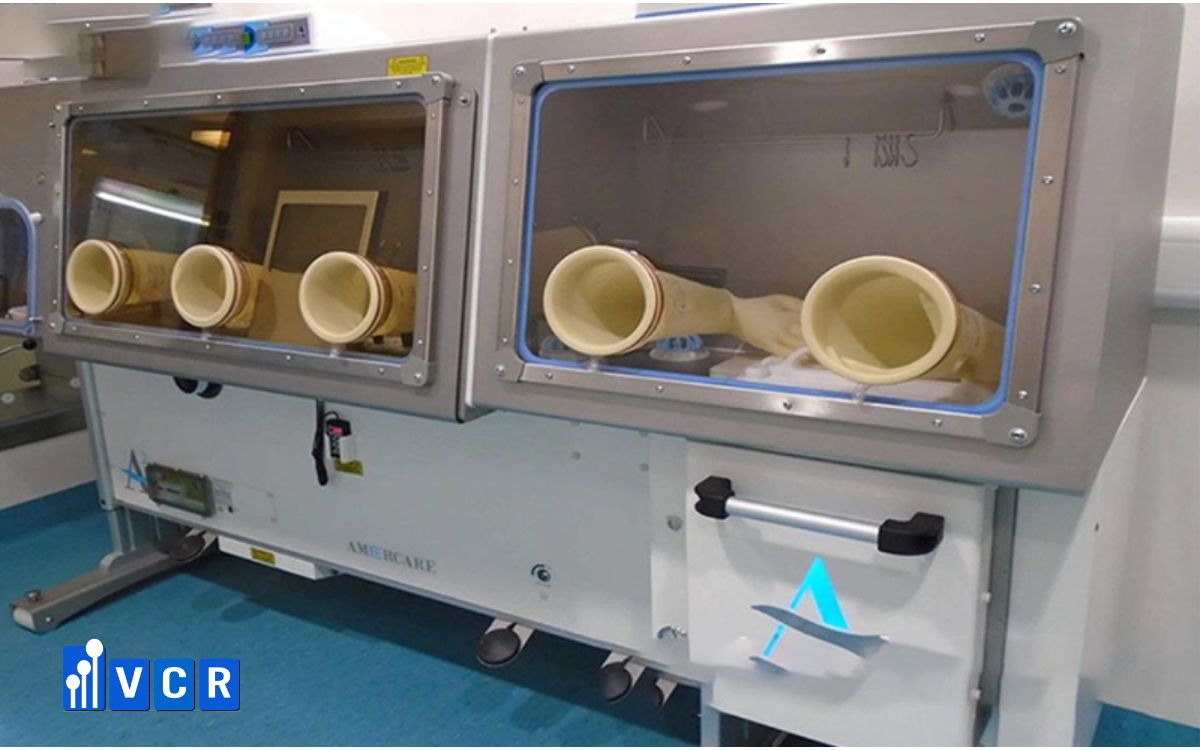
The double glove system on an isolator is a protective solution designed to enhance safety for both the product and the operator in sterile or hazardous environments. With two layers of gloves nested together, the system ensures absolute airtightness, minimizes contamination risks, and maintains continuous production processes.
- What is a double-rubber gloves system on an isolator?
- Five situations where you should integrate a double-rubber gloves system into the isolator
- Should every isolator be equipped with a double-rubber gloves system?
- Things to note when designing an isolator with a double-rubber gloves system
- FAQ – Frequently Asked Questions
This article from VCR Cleanroom Equipment helps you understand “When should an isolator be equipped with a double rubber gloves system?”, covering the concept, reasons for application, and the cases where it should be used in manufacturing environments meeting GMP standards.
What is a double-rubber gloves system on an isolator?
A double rubber gloves system is a technical solution integrated on an isolator to enhance protection during operations involving sensitive or hazardous products. The system consists of two layers of rubber glovess nested at each rubber gloves port of the isolator, helping to maintain absolute containment, reduce the risk of contamination, and ensure a continuous manufacturing process.
Basic structure: inner rubber gloves layer + outer rubber gloves layer
-
Inner rubber gloves: This layer is in direct contact with the operator’s hands and is fixed to the rubber gloves port of the isolator. It is the main rubber gloves layer, maintaining containment and blocking any contact with the outside environment.
-
Outer rubber gloves: Installed outside the inner rubber gloves, it can be replaced quickly without removing the entire rubber gloves system. If the outer rubber gloves is punctured, the inner rubber gloves still ensures safety and does not interrupt the production process.
Main functions: enhancing safety and protecting both product and operator
Using a double-rubber gloves system helps achieve three important objectives:
-
Protecting the product: In sterile environments such as injectable pharmaceuticals or medical devices manufacturing, the double-rubber gloves system helps minimize the risk of microbial contamination from the operator to the product.
-
Protecting the operator: When handling hazardous chemicals, highly active APIs or biological agents, the double rubber gloves provides an additional barrier if the outer layer fails.
-
Ensuring uninterrupted process: Because the outer rubber gloves layer is easily replaceable, rubber gloves repair or replacement won’t require shutting down the whole process or re-sterilizing the isolator.
Read more: Latest price list of Isolator used in food factory
Five situations where you should integrate a double-rubber gloves system into the isolator
Processes with high risk of cross-contamination
In sterile pharmaceutical production, especially when handling highly toxic ingredients (HPAPI), preventing cross-contamination between batches is critical. A double rubber gloves system allows the operator to replace the outer rubber gloves if torn or suspected contaminated, without opening the isolator or disrupting sterile conditions. This ensures containment and avoids contamination between batches — especially important for injectable products, ophthalmic drugs or microbiologically-sensitive reagents.
High requirements for product protection
In ultra-clean environments classified as Grade A (ISO 5), where particulate and microbial limits are extremely stringent, any lapse in operation may affect product quality. A double rubber gloves system acts as an additional control barrier. If the outer rubber gloves is torn or contaminated, the inner rubber gloves still maintains isolation effectiveness. This is especially useful in sterile filling lines, vaccine production or biologics sensitive to microbes.
Protecting the operator from hazardous agents
It’s not only the product that needs protection — the operator must be absolutely safe, especially when handling toxic chemicals, pathogenic microbes or genotoxic agents. In such cases, the second rubber gloves layer helps prevent direct contact if the first layer fails. The operator remains fully isolated from the hazard source, ensuring long-term health safety and compliance with labor safety regulations in pharmaceuticals/biologics.
Risk management in operations
A rubber gloves tear during operation is not uncommon. With a single rubber gloves setup, handling such an event typically requires stopping the machine, opening the isolator and re-sterilizing the entire workspace — causing downtime, time loss and high cost. With a double rubber gloves system, the operator needs only to change the outer rubber gloves without affecting the inner rubber gloves which continues to maintain the isolation condition. Thus operations become more flexible, downtime is reduced and production efficiency increases.
Complying with advanced GMP requirements
Standards such as PIC/S GMP, EU GMP Annex 1 are increasingly strict about controlling the risk of cross-contamination and protecting both product and operator. Although a double rubber gloves system is not strictly mandatory, many top pharmaceutical organizations adopt it as an improvement in quality management. In particular, during risk assessment (QRM), the double rubber gloves solution is often treated as an effective supplementary control measure, helping companies pass rigorous audits from regulators such as the European Medicines Agency (EMA) and Food and Drug Administration (FDA).
Read more: Compounding Aseptic Isolators: Navigating the Evolving Regulatory Landscape
Should every isolator be equipped with a double-rubber gloves system?
Using a double rubber gloves system brings clear benefits, especially in processes with stringent requirements for sterility and safety. However, it’s not mandatory for all isolators. The decision to apply should be based on a specific operational analysis.
Here are three important factors to consider:
-
Type of process – risk level
Each manufacturing or testing process has its own characteristics in terms of microbiological risk, chemical risk or particulate risk. A double rubber gloves system should be considered when:-
The process has a high risk of cross-contamination (e.g., sterile injectable filling, packaging of beta-lactam antibiotics…)
-
The product is highly toxic or demands strict protection
-
The operation is in a Grade A or equivalent environment
On the other hand, for isolators used in lower-risk environments, or only for simple testing, a single rubber gloves may suffice.
-
-
Customer’s GMP/industry requirements
Some industries such as high tech pharmaceuticals, applied microbiology or sterile medical devices have specific requirements in the URS (User Requirement Specification) about safety level, potentially making double rubber glovess mandatory. Additionally, standards such as EU GMP Annex 1, PIC/S GMP and ISO 14644 related to contamination control are recommending enhanced protective measures for both product and operator. The double rubber gloves system is considered an effective option, especially for audits or when designing systems for export to stringent markets (EU, Japan, USA…). -
Frequency of use and operation workload
For isolators used frequently, continuously across shifts or with many operators, the ability to replace a rubber gloves quickly without interrupting the system is a key factor. In such cases, the double rubber gloves helps:-
Save downtime caused by rubber gloves tears
-
Maintain continuous sterile conditions
-
Avoid shutting equipment or re-treating the whole chamber
Conversely, for isolators used periodically, low operational volume, or simple processes, the additional investment in a double rubber gloves system may not yet be justified.
-
Read more: Cleanroom Isolators: Enhancing Aseptic Processing
Things to note when designing an isolator with a double-rubber gloves system
Integrating a double rubber gloves system on an isolator requires not only equipment compliance but also optimized design to ensure operational efficiency and absolute safety. Below are three important design considerations:
Choose the rubber gloves material suitable for the application
Depending on the operating environment, the chemicals used and mechanical durability required, you need to select rubber gloves materials appropriately:
| Material | Main advantage | Typical application |
|---|---|---|
| Neoprene | Good elasticity, moderate chemical resistance | Standard sterile process |
| CSM (Chlorosulfonated Polyethylene) | Strong chemical resistance, high durability | Handling highly toxic APIs, biological labs |
| Butyl | Excellent for gas and solvent resistance | Pharmaceutical process with strong organic solvents |
Suggestion: The inner rubber gloves should be selected with good grip and greater thickness than the outer rubber gloves to increase overall durability. The outer rubber gloves should be easily attachable/detachable and have high flexibility for convenient handling.
Design of the rubber gloves port to support quick outer rubber gloves change
The rubber gloves port is the intermediate part between rubber gloves and isolation chamber. It needs to be designed so that:
-
The outer rubber gloves can be replaced easily without affecting the inner rubber gloves
-
Absolute containment is still guaranteed during operation
-
Compatibility with various rubber gloves materials (if need to switch materials)
Some key design points:
-
-
Use double-ring locking or quick-lock systems to save time in rubber gloves change
-
Combine with a rubber gloves changing bag or outer rubber gloves retaining ring that allows quick replacement without breaking the sterile environment
-
Ensure the rubber gloves port can withstand the chemicals used for equipment cleaning and sterilization
-
Train personnel to follow correct rubber gloves-changing procedure
The double rubber gloves system only reaches its full effectiveness if used and replaced properly:
-
Train the procedure for changing the outer rubber gloves without impacting the inner rubber gloves: the operation must be done in sterile condition, in the correct sequence to avoid microbial or chemical release into the environment
-
Define when to change rubber glovess: based on schedule or when damage/contamination is detected
-
Train how to handle incidents: if the outer rubber gloves is found punctured during operation, there must be a fast corrective procedure to avoid production interruption
Experience in many pharmaceutical plants shows that lack of a proper rubber gloves-change procedure leads to risk of cross-contamination or unnecessary waste when replacing the entire rubber gloves set.
Read more: Provider of Isolator – Microbial Contamination Control Equipment for Food Production
FAQ – Frequently Asked Questions
Does the double rubber gloves system reduce flexibility in handling?
Using two rubber gloves layers may feel slightly restrictive in the first operations, especially when performing delicate manipulations for long periods. However this can be mitigated by:
-
Choosing high-quality rubber glovess: prioritize rubber glovess with good elasticity, appropriate thickness such as CSM or neoprene to keep handling flexibility
-
Operator training: staff need to get used to the double rubber gloves feel, then they will handle naturally and accurately
-
Proper rubber gloves port design: fixes the rubber gloves firmly and reduces pressure on the operator’s hands
With modern isolators, double rubber gloves systems are designed so that they do not significantly affect handling performance, especially in high-precision settings such as sterile pharmaceutical production.
Can double rubber glovess be retrofitted into an existing isolator?
Yes, it is fully possible, but you should consider some technical factors before integration:
-
Check the current rubber gloves port design: does it support a double rubber gloves system? Some older isolators need modifying the rubber gloves retaining ring.
-
Check the isolation chamber compatibility: ensure the chamber depth and rubber gloves port positions won’t interfere when using two rubber gloves layers.
-
Check containment and pressure: after installing the double rubber gloves system, re-calibrate to maintain correct negative/positive pressure and no leakage.
This upgrade should be performed by a technical team experienced in isolator design to ensure operational effectiveness and compliance with GMP.
Is a double rubber gloves system mandatory under PIC/S GMP?
In the PIC/S GMP documentation and specifically Annex 1 (on sterile production), using a double rubber gloves system is not strictly mandatory. However, the standard does clearly recommend:
-
Strengthening protective measures for product and operator
-
Minimizing the risk of cross-contamination and loss of sterility
-
Having appropriate control steps based on process risk
Therefore, in high-risk applications such as sterile injectable manufacturing, handling highly toxic APIs, or Grade A environment, integrating a double rubber gloves system is considered a suitable and necessary solution to ensure maximum compliance and safety.
Are you considering upgrading or designing a new isolator for your pharmaceutical, food, or cosmetic production line?
A double-rubber gloves system is one of the key options to enhance safety and ensure GMP compliance.
1:1 consultation based on real-world projects
Industry-specific isolator design (pharmaceutical, food, electronics, etc.)
Cost-effective, efficient, and easy-to-implement solutions
Contact:
Hotline: 090.123.9008
Email: [email protected]
Website: https://isolator.vn/
Dat VCR