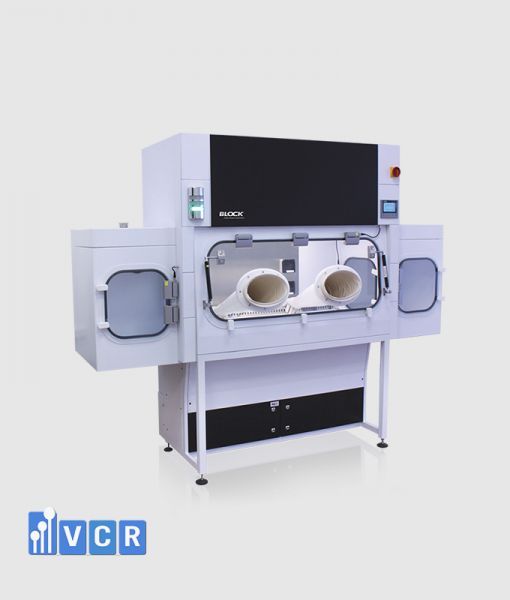
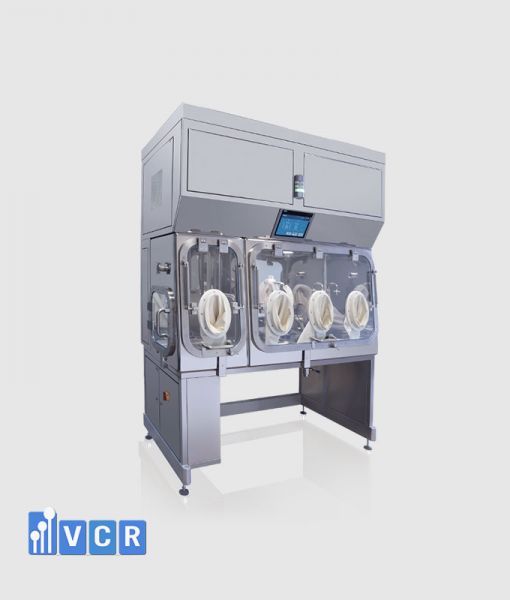
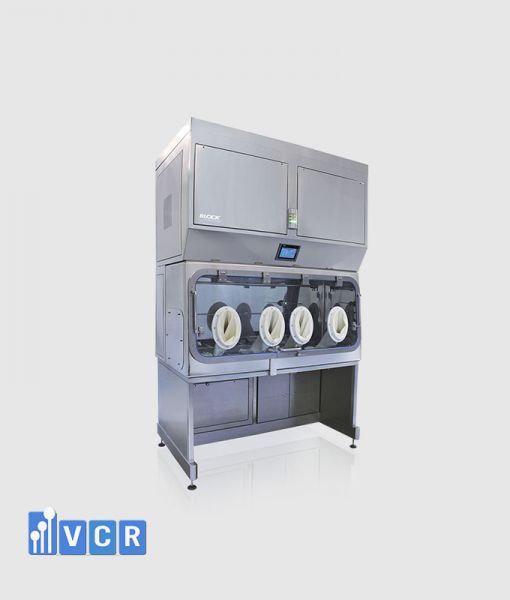
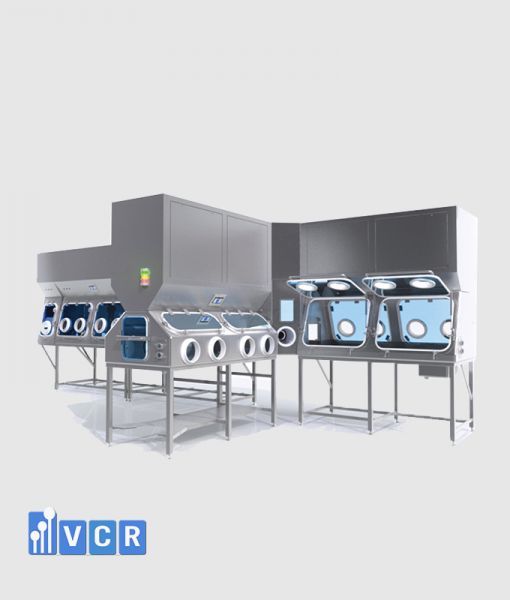
In practice, “VCR Cleanroom Equipment” has found that isolators are not just cleanroom devices but represent a higher level of contamination control, especially in sterile and pharmaceutical applications.
What is an isolator (isolation cabinet) in a cleanroom and what is the GMP definition?
An isolator is a system that creates a completely enclosed environment, isolating the internal workspace from the external environment to achieve the highest level of contamination control. It is commonly used in sterile applications.
From a GMP perspective, an isolator is not just equipment but an independent environmental control system that minimizes reliance on the surrounding cleanroom, improving process stability and contamination control.
What is the purpose of an isolator and why is it increasingly used in GMP?
An isolator is used either to protect products from contamination or to protect operators from hazardous substances. These are its two primary applications.
In modern GMP, isolators reduce contamination risks and improve process consistency, especially in sterile manufacturing environments.
How does an isolator work to ensure contamination control?
An isolator operates by maintaining a sealed environment combined with HEPA/ULPA filtration and pressure control to ensure clean internal air.
Operations are performed through integrated glove systems, minimizing direct contact and contamination risk.
What is the role of an isolator in modern cleanroom systems?
An isolator enhances contamination control beyond traditional cleanroom capabilities.
It creates a controlled micro-environment with higher cleanliness levels than the surrounding area, increasing process reliability.
When should an isolator be used instead of a traditional cleanroom?
An isolator is used when extremely high contamination control is required or when operator protection from hazardous materials is necessary.
In many cases, isolators reduce the need for high-grade cleanroom environments.
What types of isolators are used in cleanrooms?
Isolators are classified by pressure type (positive or negative) or by application (sterile, containment, etc.).
Each type is designed for specific protection requirements.
What is a positive pressure isolator and when is it used?
A positive pressure isolator protects products by maintaining higher internal pressure to prevent contamination ingress.
It is commonly used in sterile production.
What is a negative pressure isolator and when is it used?
A negative pressure isolator protects operators by preventing hazardous substances from escaping the enclosure.
It is used in handling toxic or potent compounds.
How are isolators related to HEPA and ULPA filters?
Isolators use HEPA or ULPA filters to ensure internal air cleanliness meets strict standards.
These filters are essential for system performance.
Do isolators require a surrounding cleanroom environment?
Isolators can reduce cleanroom requirements but still need a controlled surrounding environment.
This ensures overall system stability.
Can isolators fully replace cleanrooms?
Isolators do not completely replace cleanrooms but are used in combination to optimize performance.
They reduce but do not eliminate cleanroom requirements.
How is airflow controlled inside an isolator?
Airflow is tightly controlled to ensure stable and uniform distribution within the enclosure.
This is critical for maintaining contamination control.
Is pressure differential control required in isolators?
Pressure differential is essential to maintain isolation between internal and external environments.
It ensures system effectiveness.
Is decontamination required before using an isolator?
Decontamination is mandatory to achieve sterile conditions before operation.
This is a critical GMP requirement.
Is validation required for isolators?
Isolators must be validated to demonstrate consistent performance and compliance.
This is mandatory under GMP.
Are SOPs required for isolators?
SOPs are required to standardize operation, maintenance, and troubleshooting.
They ensure consistent and compliant use.
Is operator training required for isolators?
Operators must be trained to understand system operation and procedures.
This ensures safety and performance.
Do isolators impact operational costs?
Isolators may reduce overall cleanroom costs but require higher initial investment.
Cost-benefit analysis is necessary.
Do isolators impact product quality?
Isolators significantly reduce contamination risk and improve product consistency.
They are critical in high-quality manufacturing.
How should isolators be understood in modern cleanroom systems?
Isolators should be viewed as independent contamination control systems, not just standalone devices, forming part of an integrated cleanroom strategy.
When properly designed and operated, isolators enhance reliability, reduce contamination risk, and ensure long-term ISO and GMP compliance.
Duong VCR