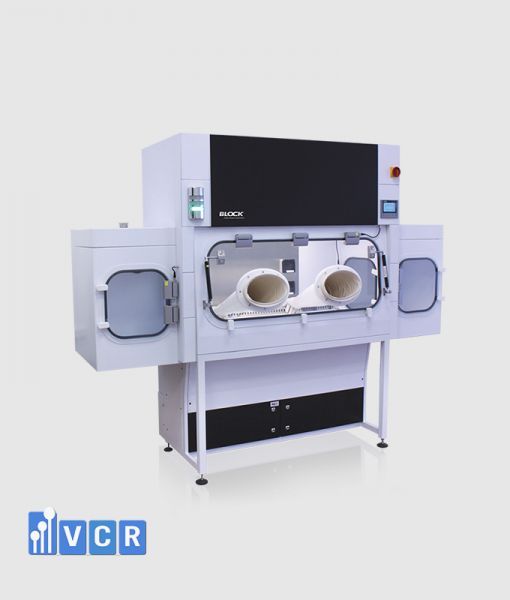
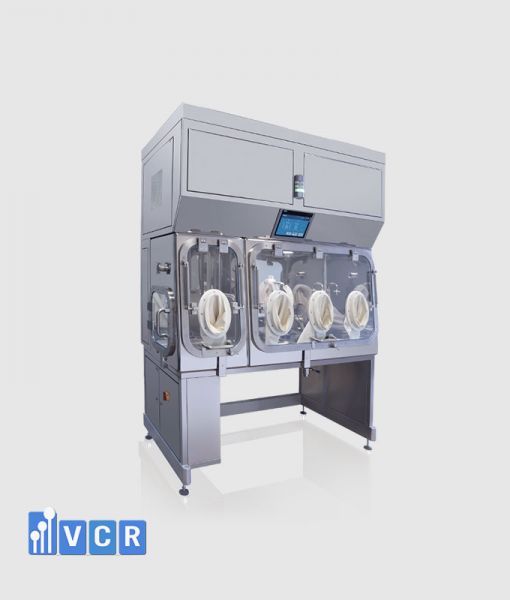
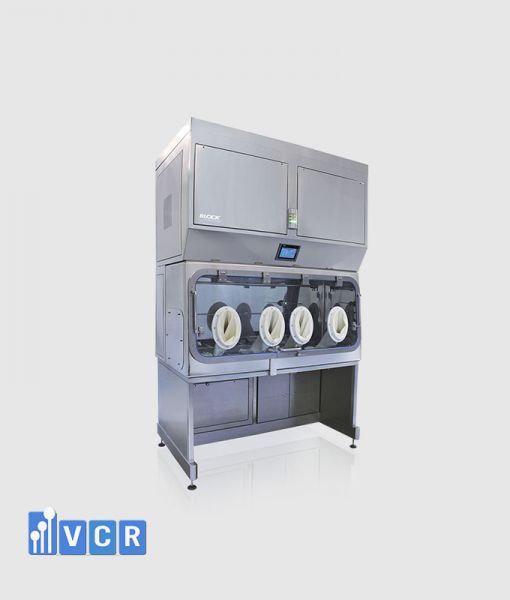
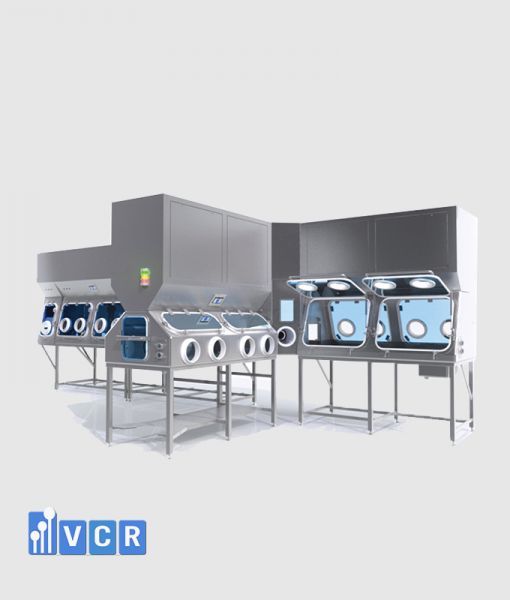
In real-world consulting, “VCR Cleanroom Equipment” has found that the biggest mistake in isolator selection is choosing based on the device itself rather than the process. This often leads to under-specification or unnecessary overinvestment.
How to choose the right isolation cabinet for a specific process?
Selecting the right isolator starts with defining the contamination control objective: product protection or operator protection. This determines the type of isolator required.
In addition, process workflow, product sensitivity, and GMP requirements must be analyzed to define the appropriate configuration rather than relying on generic specifications.
How to determine the optimal size of an isolation cabinet?
The size should be based on working space, number of operators, and process complexity inside the enclosure.
A unit that is too small restricts operation and increases contamination risk, while an oversized unit raises cost and complicates airflow control.
When should a positive pressure isolator be selected versus a negative pressure one?
Positive pressure isolators are used to protect products from external contamination, while negative pressure isolators are used to protect operators from hazardous substances.
Choosing the wrong pressure type can create serious operational risks.
What materials are suitable for isolation cabinets in GMP environments?
Common materials include stainless steel 304 or 316L due to corrosion resistance, cleanability, and low particle generation.
For sterile applications, 316L is preferred due to its superior resistance to cleaning agents and chemicals.
When is a high-end isolator configuration required?
Advanced configurations are needed for highly sensitive processes such as sterile manufacturing or handling potent compounds.
Features like VHP decontamination, continuous monitoring, and RTP systems are typically included.
Which isolator configuration is suitable for Grade B environments?
In Grade B environments, isolators are typically used to create a Grade A zone inside for critical operations.
This enhances contamination control and reduces process risk.
Should an isolation cabinet replace a clean booth?
In applications requiring higher contamination control, isolators can replace clean booths due to their fully enclosed design.
However, cost and process requirements must be carefully evaluated.
Is an integrated decontamination system necessary?
For sterile applications, integrated VHP decontamination is almost mandatory to ensure a sterile environment before operation.
Without it, GMP compliance may be compromised.
Is monitoring integration necessary when selecting an isolator?
Monitoring provides continuous data and is critical for GMP audits.
It is strongly recommended for modern facilities.
How to choose the right material transfer system?
Transfer systems such as pass boxes or Rapid Transfer Ports (RTP) should be selected based on frequency and contamination risk.
RTP is preferred for high-control environments.
Should modular or fixed isolator designs be selected?
Modular designs offer flexibility and scalability, while fixed designs are suitable for stable, long-term operations.
Selection depends on investment strategy.
Should isolators be integrated with BMS?
Integration with Building Management Systems (BMS) allows centralized control and data management.
This is increasingly standard in modern cleanrooms.
How to balance cost and performance when selecting an isolator?
Evaluation should consider total lifecycle cost (CAPEX + OPEX), not just initial investment.
A well-optimized system delivers long-term value.
Should international standards be considered from the beginning?
Selecting systems aligned with international standards avoids future upgrades and supports scalability.
This is ideal for long-term growth.
Do isolators require industry-specific configurations?
Different industries have different contamination control requirements, so isolators must be tailored accordingly.
There is no one-size-fits-all solution.
Should operational factors be considered during selection?
Operational aspects such as usability, cleaning, and maintenance significantly affect performance.
A technically advanced system that is difficult to operate may fail in practice.
Should scalability be considered in isolator selection?
Scalability allows systems to adapt to future needs and expansions.
This helps optimize long-term investment.
Is it necessary to consult experts when selecting an isolator?
Consulting experts helps avoid costly mistakes and ensures optimal system design.
This is critical for GMP projects.
How to avoid selecting the wrong isolator?
Avoid choosing based solely on price or generic specifications without process analysis.
A system-based approach is essential.
How to select the right isolator from the start using modern GMP thinking?
Correct selection begins with process analysis, risk assessment, and defining contamination control objectives before choosing equipment. This reflects modern GMP principles.
A proper choice ensures stable operation, reduced risk, optimized cost, and long-term ISO and GMP compliance.
Duong VCR